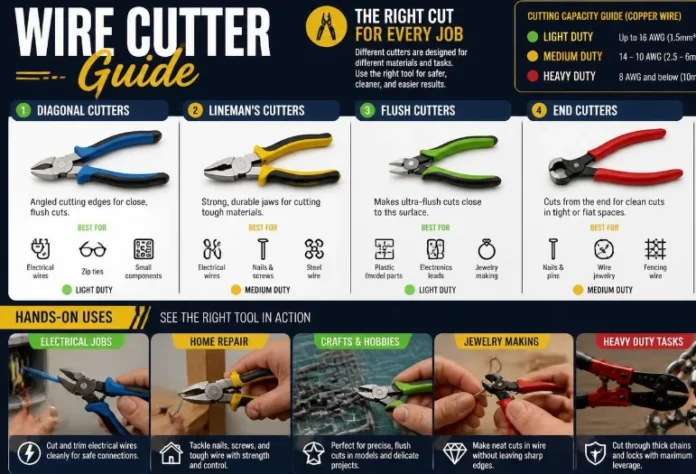
A wire cutter is designed to cut metal wire cleanly with less effort than scissors or general-purpose pliers. The right design depends on the wire material, thickness, and work area. For most U.S. homeowners, seven-inch diagonal cutters offer a useful balance of leverage and control.
Choosing the wrong tool can crush cable, damage cutting edges, or require excessive hand pressure. Flush cutters suit delicate electronics, while cable cutters handle larger conductors more cleanly. Heavy steel wire may require high-leverage cutters rather than a standard pair.
Quick answer: Choose diagonal cutters for general household jobs and flush cutters for electronics or craft work. Use cable cutters for thicker copper or aluminum cable. Match the tool’s rated cutting capacity to the material, wear eye protection, and disconnect electrical power before cutting whenever possible.
| Cutting job | Recommended type | Main advantage | Main limitation |
|---|---|---|---|
| General household wire | Diagonal cutters | Versatile and easy to control | Not ideal for large cable |
| Electronics and component leads | Flush cutters | Clean, close cuts | Easy to damage on hard wire |
| Electrical installation | Cutter/stripper | Cuts and strips with one tool | Less powerful than dedicated cutters |
| Thick copper or aluminum cable | Cable cutters | Clean cuts on larger conductors | Larger and less precise |
| Steel or fencing wire | High-leverage cutters | More cutting force | Heavier tool |
| Jewelry and craft wire | Precision cutters | Small jaws reach tight spaces | Limited cutting capacity |
Why Wire Cutter Design Matters
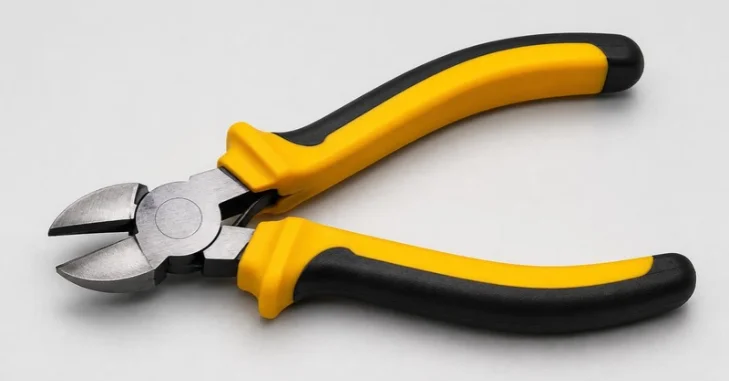
When choosing a wire cutter, understanding how different cutting edges create different results is essential. Standard diagonal jaws pinch through wire from opposing angles, whereas flush cutters minimize the small pointed end left behind by typical diagonal cuts.
Cable cutters work differently because their curved blades surround larger conductors. This design can reduce crushing and deformation during a cut. Klein sells dedicated models for cable, diagonal cutting, stripping, and combination work, which shows how specialized this tool category has become.
Readers building a broader home toolkit can also browse Livingia’s Crafts & Tools section. That section provides a natural starting point for related DIY equipment. It also keeps tool advice separate from unrelated household topics.
Six Common Types and Where Each Works Best
The best option is the one designed for the material you plan to cut. Jaw shape matters as much as handle length or brand name. Consider these six common styles before buying.
- Diagonal cutters: The strongest all-around choice for household repairs, electrical wire, ties, and light metal work.
- Flush cutters: Best for electronic components, plastic ties, jewelry wire, models, and precision crafts.
- Cable cutters: Designed for larger copper, aluminum, communications cable, and some wire-rope applications.
- Wire stripper-cutters: Useful for electrical projects requiring repeated cutting and insulation removal.
- High-leverage cutters: Place the pivot closer to the jaws, increasing mechanical advantage on harder materials.
- End cutters: Cut close to a surface and work well for nails, pins, and similar protruding material.
A dedicated tool usually performs its main task better than a feature-heavy multipurpose model. Combination tools remain convenient when portability matters more than maximum cutting force. Klein, for example, offers models that cut, strip, crimp, and shear small machine screws.
How to Choose a Wire Cutter for Your Project
Start with the material rather than the tool’s appearance. Manufacturers normally publish maximum capacities for soft, medium-hard, and hard wire. Those ratings matter because identical wire diameters can require different cutting forces.
Use this order when comparing options:
- Identify the material. Determine whether you are cutting copper, aluminum, mild steel, hardened wire, or cable.
- Check its diameter or gauge. Compare that measurement with the manufacturer’s stated cutting capacity.
- Choose the jaw style. Pick diagonal, flush, cable, or another design suited to the finished cut.
- Consider access. Compact jaws work better in electronics, cabinets, appliances, and other confined spaces.
- Check handle comfort. Wider padded grips can reduce discomfort during repeated cutting.
- Review electrical protection. Do not assume colored or plastic-coated handles provide electrical insulation.
- Inspect build quality. The joint should move smoothly without obvious jaw misalignment or handle wobble.
Testing by The New York Times Wirecutter found seven-inch models particularly versatile for general household use. Their testing covered electrical wire, hardware cloth, wire ties, fencing, and small nails. They also found grip comfort important during repeated cutting.
For workshop projects, Livingia’s Garage section can support broader tool and workspace planning. A suitable cutter is easier to select when you know where it will be used. Storage, lighting, and bench access can also affect which handle size feels practical.
Match Cutting Capacity to the Material
Never judge cutting capacity by tool size alone. A large-looking pair may still have edges intended mainly for soft copper. A smaller professional model may use harder steel and stronger leverage.
Knipex lists separate capacities for soft, medium-hard, and hard materials on its diagonal cutters. One 7¼-inch insulated model is rated for soft wire up to 5/32 inch. Its listed hard-wire capacity is 3/32 inch, showing why material hardness changes the limit.
Wire rope deserves particular attention because strands can deform or spread after a poor cut. A shear-style cable tool can produce a squarer end than ordinary diagonal jaws. Klein specifies a 9/32-inch capacity on one dedicated wire-rope model.
Handle Length, Leverage, and Comfort
Longer handles can provide more leverage, but bigger is not always better. Large tools become awkward inside electrical boxes, cabinets, appliances, and small craft projects. Compact models trade some force for better access and control.
High-leverage designs move the pivot closer to the cutting edge. This geometry reduces the hand force needed for difficult cuts. Klein states that one of its eight-inch high-leverage models produces 36 percent more cutting power than its conventional design.
Grip shape also matters during repeated work. Padded handles spread pressure across a larger area of your palm. Spring-assisted handles can be useful when making many small cuts because they reopen automatically.
Wire Cutter Safety: Power Off Comes First
Cutting wire can launch short pieces of metal toward your face. Approved eye protection is therefore a sensible precaution for household and professional jobs. Several major tool manufacturers include eye-protection warnings with their cutting tools.
Electrical work requires additional care because an ordinary plastic grip is not electrical protection. Klein specifically warns that plastic-dipped handles on non-insulated tools do not protect users from electric shock. Those tools should never be used on or near live circuits.
OSHA guidance requires appropriate insulated tools when workplace tools might contact exposed energized conductors. Homeowners should still de-energize equipment whenever possible rather than depending on insulation. Manufacturer guidance also recommends switching power off before working near conductive parts.
Are 1,000-Volt Insulated Cutters Safe for Live Wiring?
A 1,000-volt rating does not make energized electrical work risk-free. Proper insulated tools are tested to standards designed to reduce electrical hazards. They are one part of a larger electrical-safety system.
Look for recognized insulation markings rather than relying on handle color. Klein lists ASTM F1505 and IEC 60900 compliance for several insulated models. Knipex also identifies insulated cutters carrying a 1,000-volt rating.
Home DIY work should normally begin by shutting off the correct circuit. Confirm its condition using appropriate electrical procedures and equipment. Complex energized work belongs with qualified electrical professionals.
Cutter Versus Wire Stripper: Which Do You Need?
Cutters separate the conductor, while strippers remove insulation without intentionally severing the metal core. Many electrical tools combine both functions. The better choice depends on how often you need each operation.
A dedicated diagonal model usually provides more leverage for repetitive cutting. A cutter-stripper saves space and speeds routine wiring tasks. Some combination models also crimp connectors or shear small screws.
For broader home projects, Livingia’s shed workshop guide discusses using sheds as practical workspaces. A well-lit work surface improves control during detailed cutting tasks. Organized storage also helps protect cutting edges from unnecessary damage.
Which Cutter Works for Fencing, Garden Wire, and Outdoor Jobs?
Light garden ties may need only compact diagonal cutters. Thicker fence wire can require longer handles or a high-leverage design. Hardened steel should only be cut when the manufacturer specifically rates the jaws for it.
Outdoor work also exposes tools to dirt and moisture. Wipe metal surfaces after use and store them somewhere dry. A light manufacturer-approved lubricant around the pivot can help maintain smooth movement.
Garden projects often involve wire supports, trellises, repairs, and landscape materials. Livingia’s Gardening section provides a relevant path to related outdoor topics. Keeping garden tools grouped by task can also reduce unnecessary wear.
Common Buying Mistakes
The first mistake is assuming every cutting plier can handle every metal. Hard steel can chip or permanently damage jaws intended for copper. Always check the tool’s material-specific capacity before applying heavy force.
The second mistake is confusing comfort grips with certified insulation. Ordinary vinyl or plastic coverings may offer grip without meaningful electrical protection. Look for clear manufacturer ratings when electrical contact is possible.
The third mistake is buying oversized cutters for delicate work. Large jaws may block your view or damage nearby components. Choose the smallest tool that safely meets the required cutting capacity.
Our Recommendation for Most U.S. Homeowners
For a single general-purpose pair, seven-inch diagonal cutters are the strongest starting point for most home toolboxes. They balance cutting force, hand comfort, and access better than highly specialized designs. Independent testing also identifies this size as a practical household sweet spot.
Add specialized cutters only when your projects require them. Electronics users benefit from precision flush jaws, while frequent electrical work favors a quality cutter-stripper. Thick cable, wire rope, and hardened steel need tools explicitly rated for those materials.
Buying by material and cutting capacity is more reliable than buying by appearance or handle size. Check the specification sheet before tackling unfamiliar wire. That small step can protect the tool, the project, and your hands.
The Bottom Line
Choose cutting tools by wire material, thickness, and desired cut quality before comparing extra features. A general-purpose diagonal pair handles many household jobs, while specialized designs solve specific problems. Proper sizing also reduces strain and premature edge damage.
Check capacity markings before every unfamiliar task and wear eye protection during cutting. Disconnect electrical power whenever possible rather than relying on handle insulation. Add specialized tools only when your projects justify them.
Frequently Asked Questions
What is a wire cutter used for?
A wire cutter cuts electrical conductors, craft wire, cable ties, fencing material, and other thin metal products. The exact applications depend on the jaw design and rated capacity. No single model is suitable for every type of metal.
Can ordinary cutters cut electrical wire?
Yes, many diagonal and combination cutters handle common copper electrical conductors. Their exact gauge capacity depends on the model and material. De-energize the circuit before cutting whenever possible.
Can wire cutters cut steel?
Some models can cut mild, hardened, or even piano wire. Others are designed only for softer metals such as copper and aluminum. Check the manufacturer’s published hard-wire capacity before cutting steel.
Are diagonal cutters the same as side cutters?
These names are commonly used for closely related pliers with cutting edges angled near the nose. Naming conventions can vary between manufacturers and regions. Specifications matter more than the wording printed on the package.
Can I use flush cutters on thick wire?
You should avoid thick or hard material unless the manufacturer rates the tool for it. Precision flush jaws can be damaged by loads beyond their intended capacity. Use heavier diagonal or cable cutters for larger material.
What size should I buy for home use?
A model around seven inches suits many household jobs. It offers useful leverage without becoming too bulky for smaller repairs. Choose another size when access or unusually heavy material demands it.