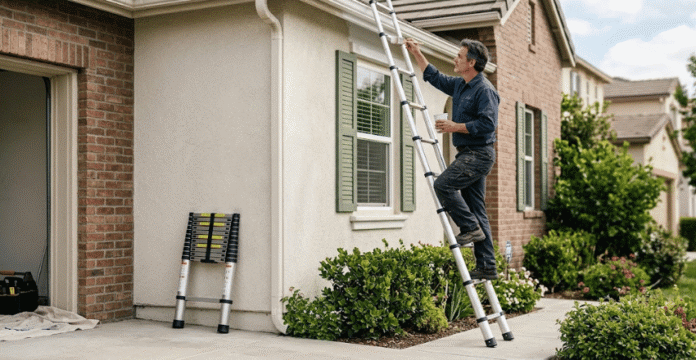
A telescoping ladder can give homeowners useful reach without taking over a garage or storage room. Its sections extend upward and collapse into a compact package when you’re done. The right model balances reach, load capacity, stability, locking quality, and manageable weight.
Direct answer: A telescoping ladder works best for homeowners who need adjustable reach and compact storage. Choose one with a suitable duty rating, clear lock indicators, nonslip feet, and controlled retraction. Always verify every lock before climbing and follow the manufacturer’s setup instructions.
| Key factor | What to check | Why it matters |
|---|---|---|
| Extended height | Maximum length and rated standing position | Advertised length does not equal standing height |
| Duty rating | User, tools, and materials combined | Total load must stay within the rating |
| Locking system | Visible or audible lock confirmation | Each extended section must remain secure |
| Retraction | Controlled or damped closing | Helps reduce sudden movement and pinched fingers |
| Feet | Wide, nonslip contact points | Improves stability on suitable surfaces |
| Weight | Total product weight | Affects carrying and repositioning |
| Certification | Applicable ANSI information | Helps buyers assess tested safety requirements |
Key Takeaways
- Choose reach based on the job, not the largest available model.
- Count your body weight, tools, and materials when checking load capacity.
- Look for clear locking indicators on every adjustable section.
- Compact size matters only if you can still carry the product comfortably.
- Use leaning models at the proper angle and on firm, level ground.
- Inspect rails, rungs, feet, and locks before every use.
- Never extend, move, or adjust a unit while someone is climbing it.
What Makes Telescoping Designs Different?

A telescopic design uses nested rail sections that slide inside one another. This construction lets the unit collapse to a much shorter length when stored. Many models can also stop at several intermediate working lengths.
That flexibility makes these products popular for garages, RVs, closets, and smaller workshops. Traditional extension models usually need more storage length. Multi-position designs offer more configurations but can also become heavier.
Current U.S. buying guides commonly focus on height, capacity, material, weight, locks, and portability. Those factors matter, but buyers should also examine usable standing height. A product’s total extended length does not automatically equal a safe standing position.
Telescoping vs. Extension vs. Multi-Position Options
Each design solves a different storage and access problem. Compactness alone should not decide your purchase. Match the equipment to the jobs you perform most often.
| Type | Main advantage | Main drawback | Good fit |
|---|---|---|---|
| Telescoping | Compact storage and adjustable length | Multiple locking points require careful checks | Home maintenance, RVs, limited storage |
| Traditional extension | Strong high-reach access | Long and awkward to store | Exterior walls, gutters, repeated tall work |
| Multi-position | Several working configurations | Often heavier and bulkier | Users needing A-frame and leaning setups |
| Stepladder | Self-supporting and simple | Limited reach | Indoor repairs and lower-height tasks |
Verdict: Choose a compact telescopic design when storage and transport matter as much as reach. Choose a traditional extension model for frequent exterior work at greater heights. A multi-position option makes more sense when one tool must handle several configurations.
How to Choose a Telescoping Ladder for Home Use
1. Start With the Height You Truly Need
Measure the task before comparing advertised dimensions. Gutters, first-story windows, attic openings, and interior ceilings can require different reach. Buying excess height adds weight and makes handling harder.
Also separate product length from maximum standing height. Some retailers list these measurements separately because they aren’t interchangeable. Always follow the manufacturer’s labeled highest standing position.
Roof-related maintenance access requirements can also change with roof shape and edge height. Livingia’s guide to common U.S. roof types can help homeowners understand those differences. Do not climb onto a roof unless your access method is appropriate and safe.
2. Check the Duty Rating Against the Total Load
Capacity must exceed your body weight. Add clothing, tools, paint, parts, and anything else you carry. Staying below the stated rating keeps you within the safe operating limit.
Current professional models commonly appear with 300-pound Type IA ratings. Werner, for example, lists its 12.5-foot TS1250 at 300 pounds. That specification applies to the rated product, not every compact model on the market.
Never assume a higher advertised number means better construction. Look for clear labeling and applicable standards information. Avoid products with vague capacity claims or missing safety documentation.
3. Examine the Locking System Carefully
Locks are among the most important parts of an adjustable climbing product. Each opened section needs to remain securely engaged during use. Visual indicators can make that status easier to confirm.
Some newer products combine visual lock indicators with reinforced rung connections. Audible engagement can also help, although you should still inspect every section. Do not rely on a single click without checking the mechanism.
Dirt, damage, or wear can interfere with moving parts. Inspect the mechanism before each use and keep it clean. Stop using the equipment if any section fails to lock correctly.
4. Prefer Controlled Retraction
Collapsing sections can move quickly on basic designs. Fingers may sit directly between descending rungs during closing. A damped or speed-controlled system can reduce that hazard.
Werner’s current telescopic model uses speed-controlled lowering. Other manufacturers use different dampening systems or release designs. Compare the operating instructions before assuming the two mechanisms work the same way.
You should still keep your hands in the positions the manufacturer specifies. Controlled closing does not remove every pinch hazard. Never improvise the closing sequence.
5. Compare Product Weight With Collapsed Size
A small stored package helps only if you can move it comfortably. Some professional units weigh more than 30 pounds despite their compact shape. Weight matters when moving between rooms, vehicles, or job sites.
Think about where you will store the equipment before buying. Measure closets, garage shelving, RV compartments, or workshop corners. A short collapsed length can be valuable in crowded homes.
Compact climbing equipment can also suit backyard workshops and storage buildings. Livingia’s shed with windows guide covers ways homeowners use sheds as workspaces. Store climbing equipment somewhere dry and protected from damaging impacts.
6. Look for Stable Feet and Comfortable Rungs
The feet should provide solid contact on a suitable surface. Worn or damaged foot pads can reduce traction. Wider contact areas may also help the base feel more planted.
Rung shape matters during longer tasks. Wider standing areas can reduce foot discomfort compared with narrow rungs. Textured surfaces can also improve grip when kept clean and dry.
Never use comfort features as a reason to remain elevated longer than necessary. Reposition instead of leaning sideways for extra reach. Keep your body centered between the rails while climbing.
7. Check ANSI Information and Manufacturer Instructions
ANSI A14.2 covers portable metal ladders, including telescoping designs. The standard addresses construction, testing, care, and use requirements. Buyers should look for the manufacturer’s compliance information.
OSHA rules primarily govern workplaces, but their setup principles still apply to homeowners. OSHA requires non-self-supporting units to use approximately a 4:1 setup ratio. That means the base sits about one foot out for every four feet of working length.
Manufacturer instructions still control the particular product you own. Read every warning label before the first climb. Do not assume another brand extends or retracts the same way.
Safe Setup Before You Climb
Start by checking the work area and the equipment itself. Look for bent rails, damaged rungs, worn feet, debris, and faulty locks. OSHA workplace rules also call for defective portable equipment to be removed from service.
Use a firm, level surface unless the manufacturer provides an approved stabilization method. Keep the top and bottom areas clear of clutter. Avoid doorways, traffic paths, or locations where another person could strike the base.
For a leaning configuration, set the angle before climbing. OSHA describes a horizontal base distance near one-quarter of the working length. Never move, shift, or extend the equipment while someone is on it.
Follow these checks before every climb:
- Inspect rails, rungs, locks, and feet.
- Confirm the surface is firm and level.
- Extend sections according to the manufacturer’s sequence.
- Verify every required lock is engaged.
- Set the correct leaning angle.
- Keep the landing and base areas clear.
- Stay within the rated total load.
- Face the rungs while climbing.
- Keep your body centered between the rails.
- Descend before repositioning anything.
Where Compact Adjustable Ladders Work Best
These products suit homeowners with limited storage and occasional high-reach work. Common tasks include window cleaning, decorating, accessing storage, painting, and exterior inspections. Their adjustable height can reduce unnecessary extended length for smaller jobs.
They can also help around garages, workshops, and sheds when the manufacturer permits the intended configuration. For indoor projects, Livingia’s Home Appliances and DIY section includes projects such as installing floating shelves. Choose a self-supporting product when a wall or secure upper support isn’t available.
Moisture can affect stored tools and equipment over time. A damp basement or shed may not be the best place to store them. Livingia’s mold and moisture detection guide explains how homeowners can identify persistent damp conditions.
When a Traditional Extension Model Is Better
Compactness should not outweigh suitability for the task. A standard extension product may be easier to choose for repeated exterior work requiring substantial height. Professional users may also prefer equipment designed specifically for frequent jobsite handling.
Traditional extension designs use fewer nested sections. This can make them more familiar to experienced users. Their biggest disadvantages are their length for transport and their storage requirements.
Use the equipment designed for your exact job. OSHA states that ladders should only be used for their intended purpose. Do not improvise a self-supporting model as a leaning model unless the manufacturer permits that configuration.
Frequently Asked Questions
Is a telescoping ladder safe for homeowners?
A telescoping ladder can be safe when you select, inspect, and use it correctly. Make sure every required section locks before you climb. Safe setup also depends on the surface, angle, total load, and manufacturer instructions.
What height should I buy?
Choose the shortest model that safely provides the access your normal projects require. Don’t choose based solely on the advertised maximum length. Check the highest permitted standing position and the access clearance you need.
Is a 300-pound rating enough?
A 300-pound rating suits many users, but the total load determines suitability. Add your body weight, clothing, tools, and any materials you carry. Never exceed the specific product’s labeled capacity.
Can I use one to access a roof?
Some leaning models can provide roof access when specifically designed and positioned for that purpose. OSHA workplace guidance requires side rails to extend above an upper landing or use another approved access method. Homeowners should follow the manufacturer’s instructions and avoid roof access if unsure.
Can I extend only part of the unit?
Many products allow selected working heights, but extension procedures vary by manufacturer. Some sections must open in a particular sequence. Follow the manual instead of copying another model’s setup method.
How should I store it?
Collapse and secure it according to the manufacturer’s instructions. Store it somewhere dry, away from rails and locks, so they won’t get struck or contaminated. Inspect the moving parts again before the next use.
The Bottom Line
A compact, adjustable design makes sense when storage, transport, and flexible reach are top priorities. Safety features deserve more attention than maximum advertised height. Strong locks, clear indicators, suitable capacity, stable feet, and controlled closing provide more useful buying criteria.
Match the equipment to your regular projects before comparing price. Read its labels, understand its standing limits, and inspect it before every climb. Choose a different ladder type when the job exceeds the product’s intended use.