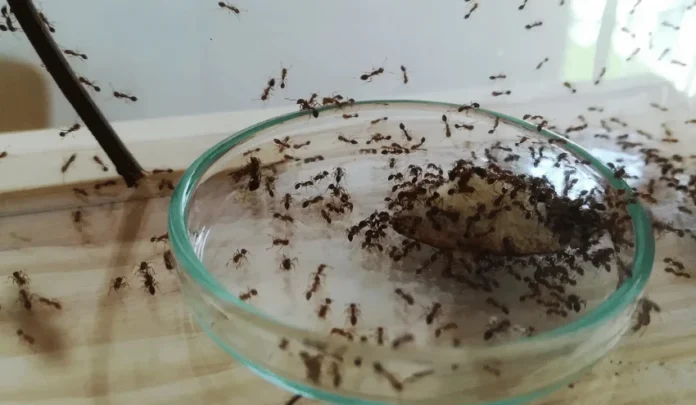
Finding ants in house spaces usually means a nearby colony has discovered food, water, or shelter indoors. Killing the workers you see may provide quick relief, but it rarely reaches the source. A better plan targets the colony while removing the conditions that keep bringing pests back.
Direct answer: Start by following the trail and finding what attracts the insects. Place a labeled indoor bait near active routes, then remove food and moisture sources. Avoid spraying beside bait, clean the trail after activity falls, seal entry gaps, and watch for signs that require professional help.
| Situation | Best first action | Why it helps |
|---|---|---|
| Trail across a kitchen counter | Find the food source and place labeled bait nearby. | Workers can carry slow-acting bait toward the colony. |
| Activity around a sink | Check for leaks and standing water. | Moisture can keep indoor activity going. |
| Pests are entering around the trim. | Trace the route before sealing it. | Closing gaps too early can move activity elsewhere. |
| Large dark insects near damp wood | Check for moisture damage. | Carpenter species may use water-damaged wood. |
| Tiny yellow insects in several rooms | Avoid repellent sprays | Pharaoh colonies can split when disturbed. |
| Repeat activity after treatment. | Recheck species, bait choice, and entry points. | Different colonies can prefer different foods. |
Key Takeaways
- Target the colony instead of relying only on contact sprays.
- Use indoor bait exactly as its product label directs.
- Keep pesticides away from children and pets.
- Remove crumbs, grease, pet food, and accessible water.
- Fix plumbing leaks and other persistent moisture sources.
- Seal exterior gaps after the active trail begins declining.
- Get professional help for persistent, widespread, or unusual activity.
Why These Pests Keep Coming Indoors
Most household species enter buildings while searching for food or water. Kitchens offer crumbs, grease, sweets, and pet food within a small area. Bathrooms, laundry rooms, and utility spaces can provide dependable moisture.
A scout can leave a chemical trail after finding a useful resource. Other workers then follow that route between the colony and your home. This explains why the same countertop, baseboard, or window edge may become active repeatedly.
Weather can also change indoor activity. Dry conditions may increase the search for water, while heavy rain can disturb outdoor nesting areas. Seasonal swarming can create a different problem because winged reproductive insects may suddenly appear indoors.
How to Get Rid of Ants in House Areas: 7 Practical Steps
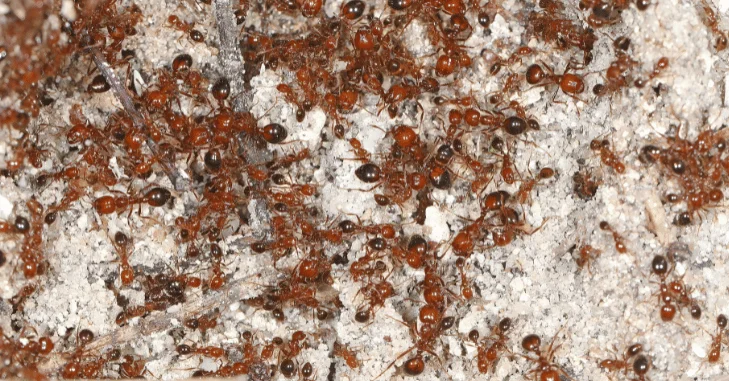
1. Follow the Trail Before You Clean It
Watch the route for a few minutes before wiping everything away. Look for gaps near windows, doors, pipes, cabinets, baseboards, and exterior walls. Finding the route helps you place treatment where workers already travel.
2. Remove Competing Food Sources
Store pantry foods in sealed containers and wipe sticky residue from shelves. Clean grease, crumbs, syrup, and spills from counters and floors. Pick up pet food after feeding when that fits your pet’s routine.
Pay extra attention around cooking appliances because grease can collect in hidden edges. Livingia’s oven-cleaning guidance can help with deeper kitchen maintenance around stubborn food buildup. Regular appliance cleaning also makes new pest activity easier to notice.
3. Place a Labeled Bait Near Active Routes
Slow-acting bait lets foraging workers carry treatment toward the colony. The University of Minnesota Extension describes bait as the most effective approach for many indoor infestations. Results may take time because the treatment must move through the colony.
Choose a product labeled for the location and pest you are treating. Place it where the label permits and where children cannot reach it. Keep pets away from bait unless the label specifically addresses safe placement around them.
4. Do Not Spray Beside the Bait
A contact spray can kill workers before they return to the nest. Repellent products can also redirect a trail rather than solve the original problem. University extension guidance commonly recommends avoiding sprays around active bait placements.
This warning matters even more when dealing with pharaoh species. UC Integrated Pest Management notes that spraying can disperse these colonies into new locations. Baiting, sanitation, and exclusion are safer management strategies for that species.
5. Remove Water Sources
Check beneath sinks, around toilets, behind refrigerators, and near dishwashers. Repair dripping pipes, condensation problems, and other recurring moisture sources. Dry wet surfaces instead of leaving standing water overnight.
Repeated dampness can point to a larger maintenance issue. Livingia’s mold detector guide explains how moisture meters and humidity monitors can help identify wet conditions. These tools do not identify pests, but they can reveal conditions that support several household problems.
6. Clean the Trail After Activity Drops
Once bait activity begins falling, clean the surfaces along the previous route. Soap and water can remove food residue and help erase the chemical trail. University guidance also notes that diluted vinegar can temporarily disrupt trail-following behavior.
Do not treat vinegar as a colony-killing solution. It may interfere with a route, but it does not reliably eliminate a hidden nest. Use cleanup as one part of the larger control plan.
7. Seal Entry Points
Caulk cracks around windows, trim, cabinets, and other confirmed entry locations. Repair worn weatherstripping around doors and inspect gaps around utility penetrations. Trim vegetation that creates direct bridges from plants to the building.
Inspect appliance and utility areas during the same maintenance check. Livingia’s home-appliance resources can help you plan routine inspections around refrigerators and other large fixtures. Hidden gaps behind these areas can otherwise remain unnoticed.
What Type Are You Seeing?
Correct identification can change the treatment plan. Color alone is not always reliable, so size, location, behavior, and nesting habits also matter. A pest professional can provide a firmer identification when the signs are unclear.
| Likely type | Common clue | Why identification matters |
|---|---|---|
| Odorous house | Small, dark workers following strong trails | Often attracted to sweets and household food |
| Pavement | Small brown or black workers near foundations | Nests commonly occur near concrete and cracks. |
| Carpenter | Larger workers, sometimes near damp wood | Indoor activity may point toward moisture-damaged wood. |
| Pharaoh | Tiny yellow or light-brown workers | Repellent sprays can worsen colony dispersal. |
Carpenter activity deserves extra attention around damaged wood. Colorado State University Extension notes that indoor nests are often associated with previous water damage. Look for moisture problems instead of assuming every large worker signals structural damage.
Do Vinegar, Cinnamon, Essential Oils, or Baking Soda Work?
Home remedies often dominate social media because they are inexpensive and easy to try. The problem is that temporary repellency is different from eliminating a colony. A surface may look clear while the nest remains active elsewhere.
University of Minnesota Extension says several popular repellents, including essential oils and certain herbs, are not effective colony-control methods. Vinegar can help clean trails temporarily, but it should not replace bait or exclusion. Claims about homemade mixtures should therefore be treated cautiously.
Commercial pesticides also require care. The U.S. Environmental Protection Agency advises consumers to read the entire pesticide label before use. Labels explain placement, storage, first aid, and precautions for children and pets.
Kitchen, Bathroom, or Bedroom: Does the Room Matter?
A kitchen trail usually points toward food, grease, water, or an entry gap. Search beneath small appliances, beside trash containers, and along countertop seams. Check pantry packages for spills before placing any treatment.
Bathroom activity often makes moisture a stronger suspect. Inspect plumbing penetrations, vanity cabinets, tub edges, and damp trim. A recurring trail near a wet wall can justify checking for hidden leakage.
Bedroom activity often begins with food, drinks, pet bowls, or a nearby exterior opening. Remove those attractants and trace the route before using pesticides. Treating the room without finding the source can shift activity to another area.
How to Keep Them From Coming Back
Prevention works best when food control, moisture control, and exclusion happen together. Clean spills promptly, keep pantry goods sealed, and rinse sticky recyclable containers. Avoid leaving accessible pet food or dirty dishes out overnight.
Walk around the exterior several times each year. Check door sweeps, window frames, siding gaps, utility lines, and foundation cracks. Move dense vegetation and accumulated debris away from the structure where practical.
Do not create broad pesticide barriers without reading the product directions. The EPA recommends prevention first and describes baits as a lower-exposure first chemical defense for many household pests. Any pesticide should be used only where its label permits.
When to Call a Pest-Control Professional
Professional help makes sense when indoor activity stays heavy after correct baiting and sanitation. It is also useful when you cannot identify the species or locate the likely source. Multi-unit housing may require coordinated treatment because colonies can cross between apartments.
Call sooner if you suspect carpenter activity in damp or damaged wood. Widespread pharaoh activity is another reason to avoid trial-and-error spraying. A qualified technician can identify the species and choose a treatment suited to its behavior.
You should also seek help when safe treatment placement is difficult. Homes with young children, curious pets, or inaccessible wall voids can complicate DIY control. Professional treatment does not replace home maintenance, so leaks and entry gaps still need attention.
Frequently Asked Questions
Why do I keep finding ants in house areas after cleaning?
Cleaning removes food and residue, but the colony may still exist nearby. Workers can return when they locate another food or water source. Combine sanitation with correctly placed bait and entry-point control.
Should I kill the workers I can see?
Killing a few visible workers rarely removes the colony. When bait is being used, workers need time to carry it toward the nest. Avoid spraying the same route unless the product strategy specifically requires it.
How long does indoor bait take to work?
Results depend on species, colony size, bait acceptance, and product formulation. University guidance notes that colony control can take several weeks in some situations. Follow the product label and replace bait only as directed.
Is bait safe around children and pets?
No pesticide should be assumed safe simply because it comes in a station. EPA guidance says pesticides and insect baits should stay out of children’s reach. Follow the label and choose placements that pets cannot access.
Does seeing winged insects mean there is a nest inside?
Not always, because reproductive insects can enter from outdoors during seasonal flights. Repeated emergence from one indoor wall, window, or structural area deserves closer investigation. Save a specimen or photograph for identification when possible.
What should I do if the problem keeps returning?
Recheck the species, food source, moisture, treatment placement, and exterior entry points. A recurring problem often means one part of that system remains unresolved. Professional identification can save time when repeated DIY treatment fails.
A Better Long-Term Approach
The fastest-looking solution is not always the one that provides lasting control. Target the colony, remove food and water, and close the routes pests use to enter. That combination addresses both the current activity and the reason it started.
Start by tracing the most active trail in your home today. Check its destination, inspect nearby moisture, and choose a label-approved treatment strategy. Once activity declines, clean the route and seal the confirmed entry point.