A good fly trap should match the insect, location, and problem source. For most U.S. homes, plug-in glue-card traps work well indoors, while baited traps suit outdoor fly pressure. Fruit flies need another approach, usually a small liquid or funnel trap near fermenting material. Also worth reading: Wire Cutter.
| Problem | Best first option | Placement | Maintenance |
|---|---|---|---|
| House flies indoors | Sticky card, window trap, or UV glue-card unit | Near activity, away from open exterior doors | Replace adhesive when full or dusty |
| Fruit flies | Liquid or funnel trap | Near fruit, recycling, or the suspected source | Refresh bait and clean the source |
| Outdoor house or blow flies | Baited bag or jar trap | Away from patios and doors, near the source | Refill or discard as the label directs |
| Repeated heavy activity | Source control plus trapping | Inspect waste, drains, pet areas, and produce | Correct the source before adding devices |
Choose a trap by fly type and location, not by size or marketing claims. Use sticky or UV glue-card traps indoors, fruit-fly liquid traps near fermenting sources, and baited containers outdoors. Pair every trap with sanitation and exclusion, because trapping adults alone rarely removes the breeding source.
Why Trap Type Matters
Flies respond to different cues, including light, odors, and places where they naturally land. One device can perform well in a kitchen but poorly beside an outdoor trash area. Matching the trap to the species and setting usually matters more than buying the largest unit.
Traps also work best as one part of an integrated pest-control plan. EPA guidance emphasizes identification, prevention, sanitation, and targeted control before heavier pesticide use. Colorado State Extension also notes that trapping alone does not provide satisfactory control in homes.
Fly Trap Types Compared
| Type | Best use | Pros | Cons |
|---|---|---|---|
| Sticky ribbons or cards | Utility rooms, windows, garages | Cheap, simple, no power needed | Visible insects, adhesive can collect dust |
| Window adhesive traps | Flies gathering on glass | Discreet profile, no bait or power | Only works where flies land |
| UV glue-card plug-ins | Kitchens, hallways, living spaces | Quiet, contained capture, easy refills | Needs an outlet and replacement cards |
| Baited bag or jar traps | Yards, waste areas, animal areas | Strong attraction for outdoor nuisance flies | Odor can be unpleasant near people |
| Liquid or funnel fruit-fly traps | Kitchens and recycling areas | Targets small fruit flies near sources | Does not remove breeding material |
| Electric grid traps | Garages or utility areas | Reusable and fast capture | Needs power, cleaning, and careful placement |
For most indoor rooms, a UV glue-card unit offers a clean balance of attraction and containment. Plain sticky cards cost less and work where flies already rest or land. Outdoors, an odor-based bait container usually fits better because it draws larger nuisance flies away from living areas.
Sticky Ribbons, Cards, and Window Traps
Sticky ribbons and cards do not need power, bait mixing, or complex setup. They work best where flies already travel, including windows, utility spaces, or trash areas. Their main drawback is visibility, because captured insects remain exposed until you replace the strip.
UV Glue-Card Plug-Ins
Plug-in UV traps use light to attract flying insects toward a replaceable adhesive card. They suit kitchens, hallways, and living spaces when placed away from competing sunlight. Choose designs that hide the glue surface if appearance matters in shared rooms.
Baited Outdoor Traps
Baited outdoor traps use food or odor lures to pull flies into a container. They can work well near garbage, animal areas, or other confirmed sources. Keep strong-smelling lures away from doors, patios, grills, and gathering places.
Outdoor placement matters because the lure competes with other odors. A trap beside a dining table can move the problem toward people. Follow the label for hanging, refills, disposal, and any distance recommendations.
Liquid and Funnel Traps for Fruit Flies
Fruit flies often gather around fermenting food, recycling residue, drains, or moist organic material. A small cider-vinegar funnel trap can catch adults near the source. Penn State Extension recommends removing ripe produce and keeping problem areas clean and dry.
Commercial liquid traps use the same basic idea with a prepared attractant and escape-limiting container. Place them close to the active area rather than across the room. Clean the surrounding source at the same time so new adults do not keep appearing. Livingia’s Kitchen section covers the food-area routines that keep those sources under control.
Match the Trap to the Fly You Have
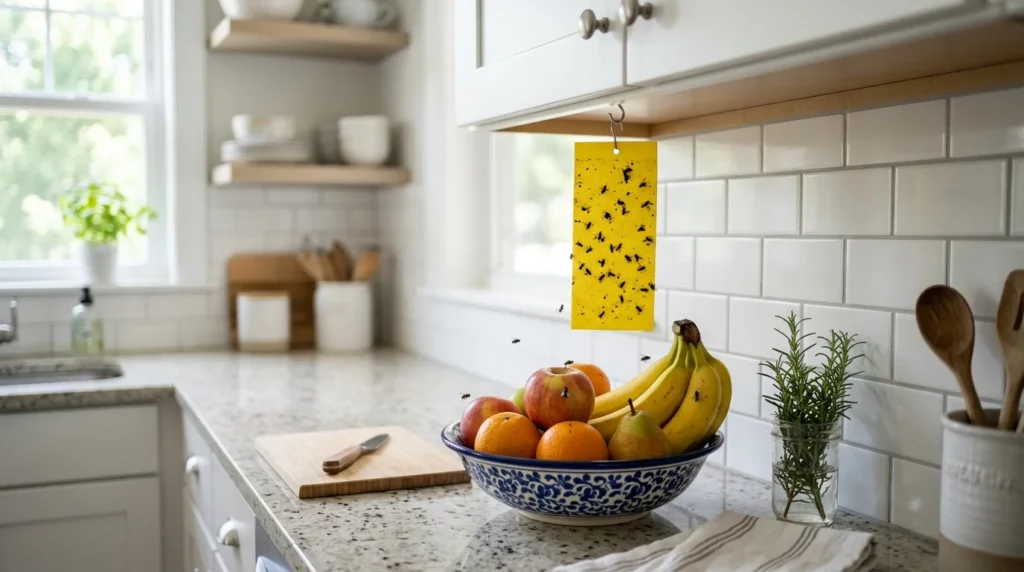
House flies are medium gray flies that often move between garbage and indoor surfaces. Fruit flies are much smaller and cluster near ripe fruit, recycling, and fermenting residue. Fungus gnats resemble tiny dark flies and often come from damp potting soil.
If you are unsure, watch where the insects gather before buying anything. A window cluster suggests a different route than activity around bananas, drains, or houseplants. Correct identification prevents using a strong odor lure for a problem that needs moisture control.
A Three-Question Shortcut Before You Buy
Use this three-question test before choosing a device. First, is the problem indoors or outdoors? Second, what kind of fly is present? Third, do you need attraction, interception, or simple monitoring?
- Indoors with house flies: start with a UV glue-card trap or sticky interception trap.
- At windows: use clear adhesive cards where flies already land.
- Around fruit or recycling: use a liquid or funnel trap and remove fermenting material.
- Outdoors near garbage or animal waste: use a labeled baited container away from people.
- Near damp houseplant soil: address moisture and use appropriate sticky monitoring cards.
Best Choice by Problem Area
House Flies Inside the Home
Start with a sticky card or UV glue-card device near the route flies already use. Check windows, doors, and screens before adding more traps. If adults keep appearing, inspect trash, pet waste, or hidden organic material for a breeding source.
The goal is to intercept flies without advertising an attractant through an open doorway. Darker interior walls often give UV devices better contrast than bright window areas. Move the device if captures stay low while flies remain active elsewhere.
Fruit Flies in the Kitchen
Place a liquid or funnel trap near the fruit bowl, recycling bin, sink, or active area. Then refrigerate ripe produce and clean sticky residues from containers and counters. A trap can reduce adults, but removing fermenting material stops the cycle more effectively.
If activity continues, inspect bottle returns, garbage disposals, damp rags, and forgotten produce. Small amounts of residue can support repeated fly activity. Regular kitchen cleaning matters more than adding several traps around the room.
Flies Around Trash, Patios, or Yards
For outdoor house flies, use a baited trap near the source rather than beside the seating area. Wind and odor matter, so move the trap if flies still cluster around people. Follow the product label, because some outdoor lures smell too strong for enclosed spaces.
Keep garbage lids closed and clean residue from cans before adding more bait. Remove pet waste and rotting organic material on a regular schedule. The trap should support those steps rather than become the only control method.
Where to Place Traps for Better Results
Placement can decide whether a trap intercepts insects or attracts them toward the wrong area. Indoor light traps should not compete with bright windows or face open exterior doors. Outdoor odor traps should sit away from entrances and gathering areas.
- Identify the insect and the place where activity is highest.
- Find the likely food, moisture, waste, or entry source nearby.
- Choose a trap that uses the right attraction method for that insect.
- Place it where flies travel, without drawing outdoor insects inside.
- Check it frequently at first, then adjust placement if captures stay low.
Source control is easier when regular cleaning is part of the same plan. Livingia’s Cleaning section covers the household upkeep that removes those sources. If cooking residue contributes, the site’s oven-cleaner guide covers safer appliance-cleaning choices.
What Traps Cannot Fix?
Repeated fly activity usually means food, moisture, waste, or an entry point remains available. EPA guidance recommends prevention and mechanical controls before escalating treatment. That means sealing screens, removing garbage, cleaning spills, and correcting breeding conditions alongside trapping. Also worth reading: Garage-Ready Refrigerator.
House flies often breed around garbage and decaying organic material, while fruit flies favor fermenting produce and moist residues. These insects can keep emerging even when adult captures look impressive. If the source remains, a fly trap becomes a monitoring tool instead of a complete solution.
Safety Around Food, Children, and Pets
Read the label before using any commercial lure, adhesive, or electrical trap. Keep devices where children and pets cannot touch glue, cords, or bait. Avoid placing traps over exposed food, dishes, or preparation surfaces.
If a product contains pesticide bait, follow its EPA label directions for placement and handling. Do not improvise stronger mixtures or combine household pest-control chemicals. Consider a licensed pest professional when the problem is severe or the source stays hidden.
Our Verdict for Most U.S. Homes
We recommend choosing by setting instead of chasing one universal product. Use UV glue-card or sticky traps indoors, liquid funnel traps for fruit flies, and odor bait traps outdoors. Then remove the breeding source, because strong capture rates cannot replace sanitation and exclusion.
Frequently Asked Questions
What is the best fly trap for indoors?
For most homes, a plug-in UV glue-card trap is a practical indoor choice. It attracts common flying insects without an exposed electric grid. Sticky window traps are cheaper when flies already gather on glass.
Do fly traps attract more flies?
Attractant traps can pull flies toward their odor or light within a local area. That only helps when placement guides insects away from people and entrances. Keep outdoor bait traps away from doors, patios, and dining spaces.
How often should I replace or clean a trap?
Replace sticky surfaces when they are full, dusty, or no longer adhesive. Refresh liquid bait according to the product label or when performance drops. Clean reusable containers before refilling so old material does not become part of the problem.
Why do flies keep coming back after I set traps?
Traps remove adults, but they may not reach eggs, larvae, or hidden breeding material. Recheck produce, drains, trash cans, pet areas, and damaged screens. Persistent activity after source removal may justify professional inspection.
Take the Next Step
Start by identifying the fly and the place where activity is highest. Pick the matching trap type, then remove food, moisture, waste, and entry points around that zone. Browse Livingia’s pest-control guides for more practical home-maintenance advice.